Robina Rose
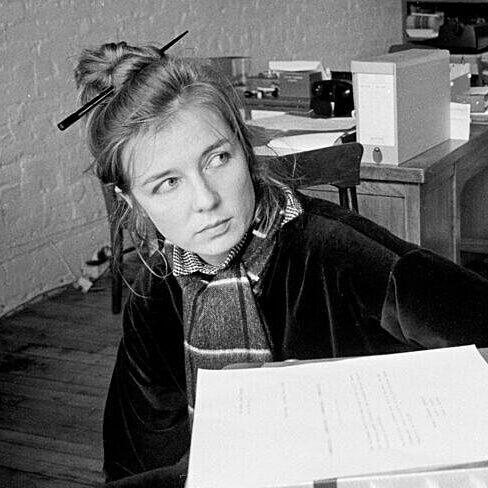
Robina Rose (1951–2025) was a British filmmaker, photographer, and cultural activist whose work bridged experimental cinema, documentary practice, and community-based media. Born in London to Danish and German parents, she grew up in Notting Hill and began her career as a film projectionist at the Arts Lab in Covent Garden before studying at the Royal College of Art, where she graduated in 1977. She also worked as a camera operator on Celestino Coronado’s Hamlet (1976), starring Helen Mirren and Quentin Crisp.
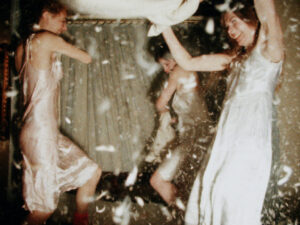
Rose became known for a small but influential body of experimental films made in the late 1970s and early 1980s. Birth Rites (1977) documents a home birth with rare intimacy; Jigsaw (1980) was created in collaboration with autistic children in London; and Nightshift (1981), featuring artist Jordan, is set in the Portobello Hotel where she worked at the time. Nightshift premiered at the Edinburgh Film Festival and was later shown at the Berlin International Forum and acquired by the Museum of Modern Art in New York.
Awarded a DAAD fellowship, Rose lived and worked in Berlin for several years and taught at the German Film and Television Academy (DFFB). She later returned to the UK to join the BBC’s Community Programme Unit, where she made socially engaged documentaries, including early environmental films addressing agricultural pesticide use.
Alongside her film work, Rose was deeply involved in environmental and community activism. She studied landscape history at the Architectural Association and became chair of the London branch of the Campaign to Protect Rural England, contributing to the development of the London Plan. She also co-founded local initiatives such as Friends of Portobello and Save Portobello, and stood as a Green Party candidate in 2015.
Her work has been rediscovered in recent years through retrospectives and exhibitions, including Women in Revolt! at Tate Britain, reaffirming her place in British experimental and feminist film history.