Another Story: Reclaiming the Forgotten History of Women Documentary Filmmakers
Reframing Women Filmmakers from the Twentieth Century, a debate held during the Sofia DocuMental Film Festival, explored how women’s contributions to documentary cinema have been marginalised and how their visibility can be restored, drawing on the histories of Poland and Bulgaria under communism.
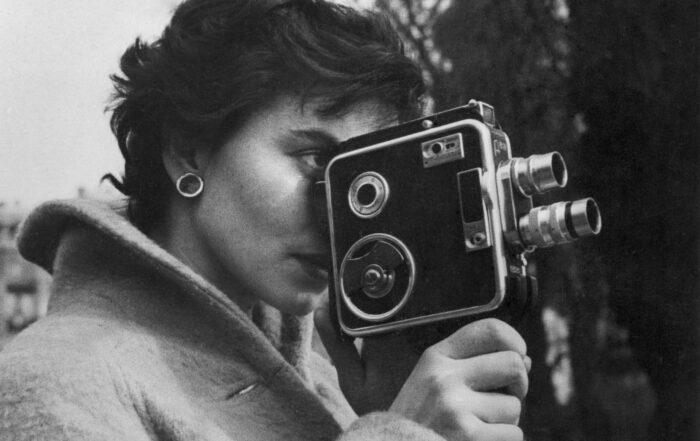
Women directors’ contribution to the history of documentary cinema in Europe is as significant as it is overlooked. The goal of Another Story, a pan-European project launched on 8 March, International Women’s Day, is to reclaim women directors’ place in documentary film history and increase the visibility of their work. The initiative brings together five European partners: Balkan Documentary Center/Sofia DocuMental (Bulgaria), HER Docs Foundation (Poland), Festival dei Popoli (Italy), The Good Media Network/Doxumentale (Germany) and Cineuropa (Belgium). Supported by the Creative Europe MEDIA programme, it is a two-year initiative. At Sofia DocuMental, the programme Women in Documentary Cinema, Before and Now included four events, each organised with the support of a different partner: the Czech Centre, Goethe-Institut, Institut français and the Polish Institute. The latter co-organised the panel discussion Reframing Women Filmmakers from the Twentieth Century, featuring researchers Teodora Doncheva and Léa Dabrowski and moderated by documentary film expert Charlotte Ducot, whose organisation, Loreley Films, is an associate partner of the initiative. The discussion aimed to revisit and compare the development of women’s documentary filmmaking in Bulgaria and Poland while introducing the Another Story initiative. The two countries’ experiences revealed both similarities and differences.In post-war Poland, documentary cinema played a crucial role in rebuilding the national film industry, and women were involved from its earliest years. However, their contributions were subsequently marginalised or forgotten.
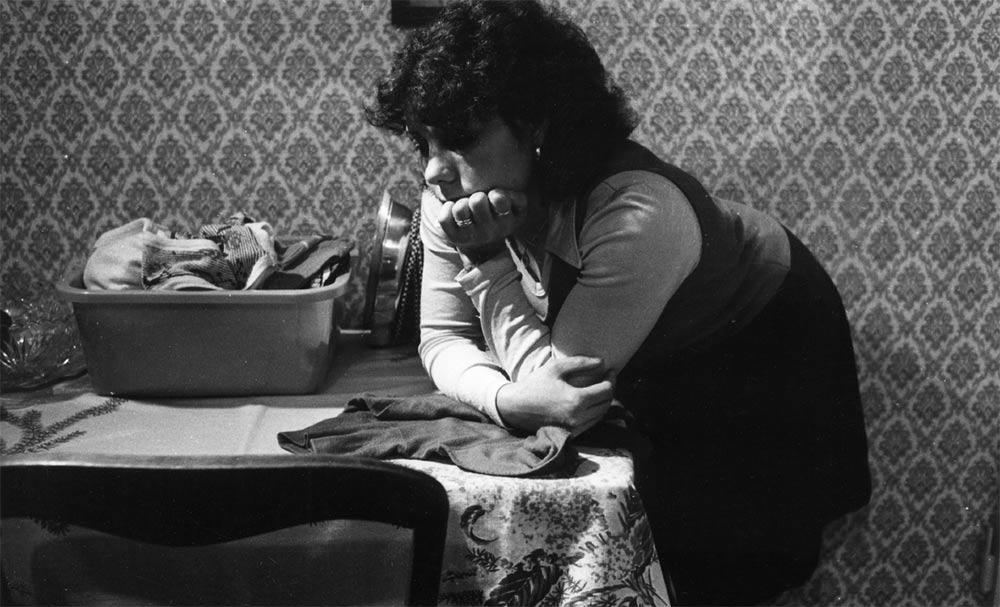
Dabrowski highlighted the careers of Jadwiga Plucińska and Natalia Brzozowska, who helped shape Polish cinema after the Second World War. Their stories illustrate how women could be excluded from film credits or prevented from pursuing their careers. Political repression during the Stalinist period further contributed to their disappearance from film history. Dabrowski also discussed the difficulties of accessing archival materials and the limited availability of some films. She noted that the documentary work of directors such as Barbara Sass, Dorota Kędzierzawska and Małgorzata Szumowska is often treated as a preliminary stage before feature filmmaking, rather than as an important part of their artistic careers. In Bulgaria, documentary filmmaking offered women more opportunities to enter the profession than feature filmmaking. According to Doncheva, the country produced numerous accomplished women documentary directors throughout the 20th century. Among them was Lada Bojajeva, whose films were selected for the Cannes short film competition in consecutive years, as well as Adela Peeva and Eldora Traykova, internationally recognised filmmakers who devoted themselves primarily to documentary cinema. Doncheva also emphasised the boldness of women filmmakers working during late socialism.
Directors such as Malina Tomova and Iskra Yosifova created films that remained faithful to social realities at a time when such an approach could itself carry a rebellious dimension. The discussion also addressed the complicated question of whether women filmmakers should be identified and celebrated specifically as women. Some directors resist this distinction, arguing that artistic merit should matter more than the gender of the filmmaker. However, dedicated research and retrospectives can help recover achievements that conventional film histories have overlooked. Attitudes towards feminist labels have also evolved. Dabrowski highlighted the contrast between Agnieszka Holland’s earlier reluctance to be labelled a feminist filmmaker and her later description of Spoor as an anarcho-feminist film. Other directors, like Szumowska, restist to being categorised primarily by their gender or feminist stance. These differences reflect the specific political and historical contexts in which Polish filmmakers have worked. Ultimately, recovering women’s contributions is not about creating a separate history of cinema, but about making existing histories more complete. This work extends beyond discussion to practical action: Sofia DocuMental also organises Wikipedia workshops aimed at improving the visibility of women filmmakers. By combining research, screenings and documentation, Another Story seeks to ensure that overlooked directors become part of the cinematic history they helped create.
Sofia DocuMental Film Festival ran from 24 September to 4 October 2026.
By Cineuropa