The Stories Behind Silence: Gertrud Pinkus on Migration, Female Perspectives and a Film That Still Resonates
There are filmmakers who write feminism onto the screen. And then there are filmmakers like Gertrud Pinkus, who simply practice it.
When Pinkus made A Woman’s Greatest Worth Is Her Silence in 1980, women in Switzerland had only had the right to vote for nine years. The film industry was dominated by men, and women behind the camera were still a rarity.
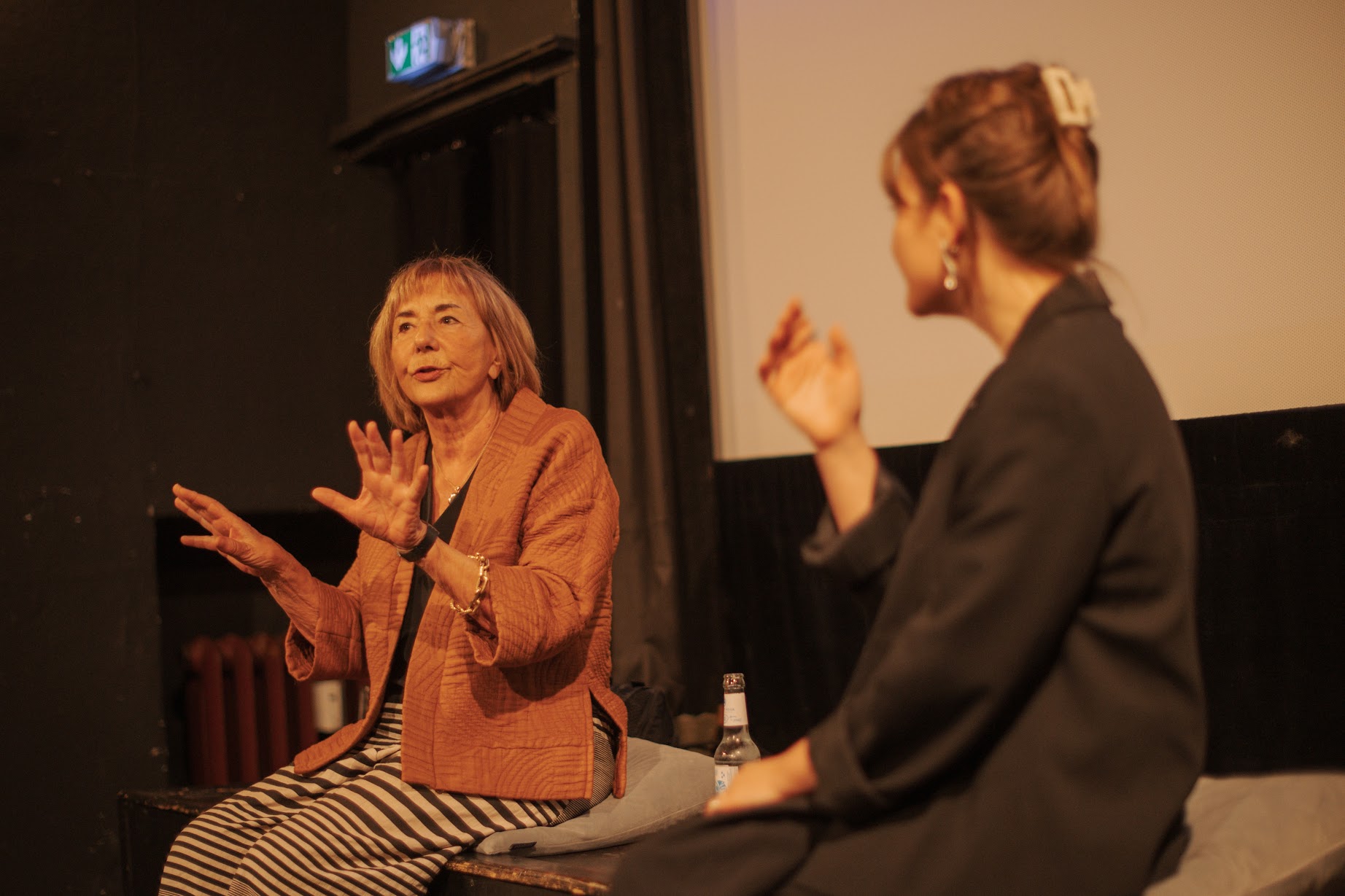
As part of this year’s Doxumentale and the Creative Europe funded project Another Story, we had the opportunity to screen the film. Before the screening, I met Pinkus over a glass of white wine to talk about her life and work; afterwards, we continued the conversation together with the audience.
It quickly became clear that this film is far more than a document about migration. It is a story about women’s lived realities, about visibility and silence, about social expectations and not least about the conditions under which women themselves were able to make films.
A Woman’s Greatest Worth Is Her Silence grew out of Pinkus’ desire to make the lives of Southern Italian migrant women visible. Hoping for a better future, Maria M. follows her husband to Frankfurt. But the promise of opportunity gradually gives way to isolation, homesickness, and loneliness. The small apartment becomes a prison; instead of the life she imagined, Maria finds herself trapped in dependency and silence. While political debates in the 1970s largely discussed “guest workers” as a labour force, Pinkus turns her attention to the emotional realities of migration and to uprootedness, invisibility, and the specific experiences of women.
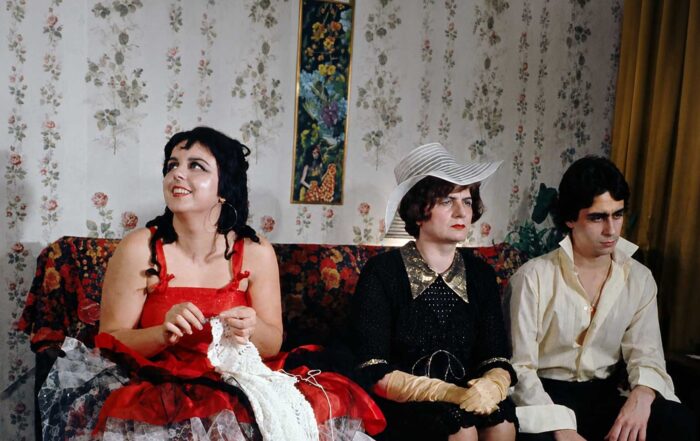
The film’s distinctive form emerged out of necessity, while also reflecting the social realities it portrays. Many of the women Pinkus interviewed wished to remain anonymous. The fear of family repercussions, social exclusion, and community surveillance was simply too great. As a result, the project evolved from a conventional documentary into a hybrid narrative. Maria’s story is told through an anonymous voice, while other migrant women reenact scenes from her life on screen. This blend of documentary and staged storytelling is one of the film’s greatest strengths. It creates a mode of storytelling that feels deeply personal and intimate while carrying significant social and political weight.
It soon becomes clear that this is not only Maria’s story. Her experiences stand in for those of an entire generation of migrant women and, in many ways, for generations that followed. What the film reveals are not individual exceptions but larger structures: isolation, dependency, patriarchal expectations, and the struggle for self-determination within systems that leave women little room to flourish. Even the title points to these structures. The Southern Italian proverb “A woman’s greatest value is her silence” speaks not merely to individual oppression but to a social order that teaches women to conform. Silence appears here not as a personal trait, but as the outcome of patriarchal power relations.
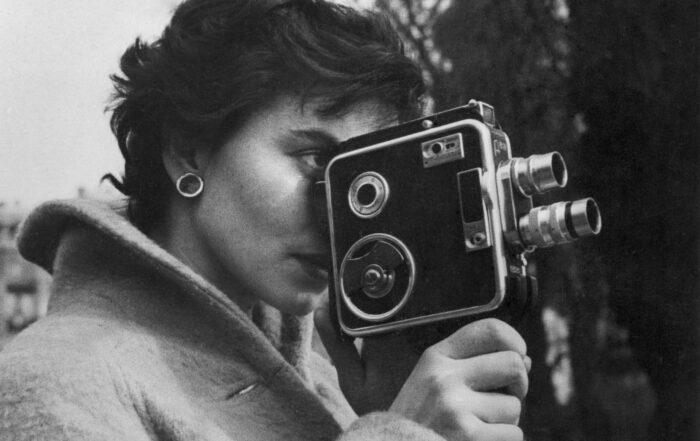
Our conversation made clear how closely this perspective is tied to Pinkus’ own position as a filmmaker. When she began making films in the 1970s, it was far from common for women to comment on social realities or tell their own stories. Pinkus spoke about the difficulty of being taken seriously as a director, particularly because she wanted to bring subjects and perspectives into view that lay outside the male-dominated gaze.
For this film especially, she explained, she would have preferred to work with an entirely female crew. Yet in the early 1980s, that was nearly impossible. Women working in technical fields such as cinematography and sound were rare. Not because they lacked talent, but because access to training, funding, and professional opportunities was often denied to them. This, too, reflects Pinkus’ feminism. Not a loud or overtly programmatic feminism, but one grounded in practice. She is interested in experiences that are overlooked, in people who rarely occupy centre stage, and in the ways social power structures shape everyday life. Her film explores care work, female friendship, emotional dependency, and female solidarity without turning them into abstract concepts or theoretical arguments. They simply appear as part of lived reality.
It is also remarkable how much Pinkus embodied what we would today call “impact production” or “impact distribution.” After completing the film, she organised a mobile cinema and travelled with it through Germany, Italy, and Switzerland. She screened the film in the very communities whose stories it told, organised community screenings, and spoke with migrant women about their experiences. She also made a conscious effort to ensure that women attended the screenings, something that was by no means guaranteed at the time. For Pinkus, film was never an end in itself. It was a tool for creating dialogue and shifting perspectives.
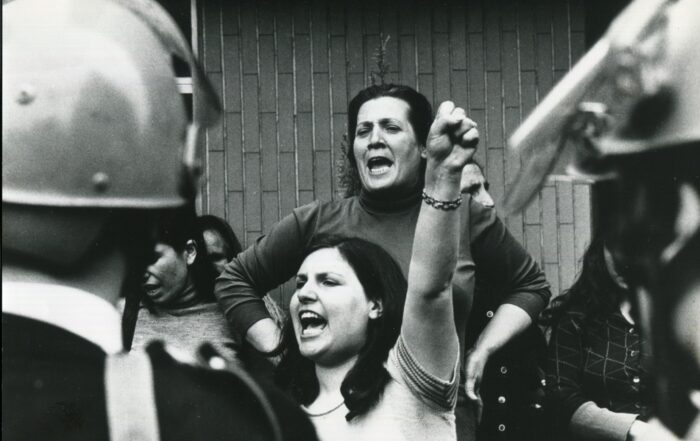
The response was significant, particularly within migrant communities. Many women recognised themselves in Maria and her experiences: the loneliness, the expectations imposed by family, and the feeling of living between two worlds. The film created a space in which topics that often remained private could finally be discussed publicly. Yet it was not only women who felt addressed by the film. Many men also began to question the dynamics within their own families. Pinkus recalled that some audience members even expressed the wish that their wives should start working as well—though whether this was truly the intended or most desirable outcome remains debatable, since employment alone does not automatically translate into freedom…
More than four decades later, A Woman’s Greatest Worth Is Her Silence still feels strikingly relevant. The images and narratives surrounding migration may have changed, and new public debates have emerged, yet many blind spots remain. Migrants are still frequently defined through integration, labour, or economic usefulness, while at the same time being constrained by racist structures and social and institutional forms of othering. The emotional and social dimensions of migration, particularly women’s perspectives, often remain invisible.
At the same time, the film is more than a powerful historical document about the lives of Southern Italian migrant women in the late 1970s. It also tells a story about the conditions under which it was made. The mechanisms of silence that shape Maria’s life are mirrored, on another level, in the experiences of the director herself: within a film industry where women had to fight for visibility, resources, and recognition.
In this sense, A Woman’s Greatest Worth Is Her Silence documents not only the reality of its protagonist, but also the reality of the era in which it was created. That is precisely where its enduring strength lies. The film reveals how deeply questions of migration, gender, and representation are intertwined—both in front of the camera and behind it. More than forty years later, it remains not only a testament to its time, but also a reminder of how political the act of listening can be. And of how radical it can be to speak when silence was all that was ever expected.
Gertrud Pinkus’ work exemplifies the core mission of Another Story: to highlight the profound impact that women’s documentary filmmaking has had on film history and to demonstrate the continued relevance of these historical perspectives today.