“I think I was born revolutionary” – A conversation with journalist and director Yvonne Scholten
Yvonne Scholten had a rebellious mind from a very young age. Two open-minded communist parents made it possible for her to stand up against stereotypes and design her own life in the 1950s and 1960s.
She was twenty-six and had just finished a degree in political science when she arrived in Italy on 12 December 1969. The date carries its own political and historical weight: that afternoon a bomb went off in the centre of Milan. The police first arrested anarchists, who turned out to have had nothing to do with it; responsibility was later traced to the neo-fascist right. Landing in the middle of the turmoil, she decided this was the right moment to start writing. She called news outlets back in the Netherlands and began writing for the left-wing weekly De Groene Amsterdammer — with the outstanding liberty to choose her own subjects.
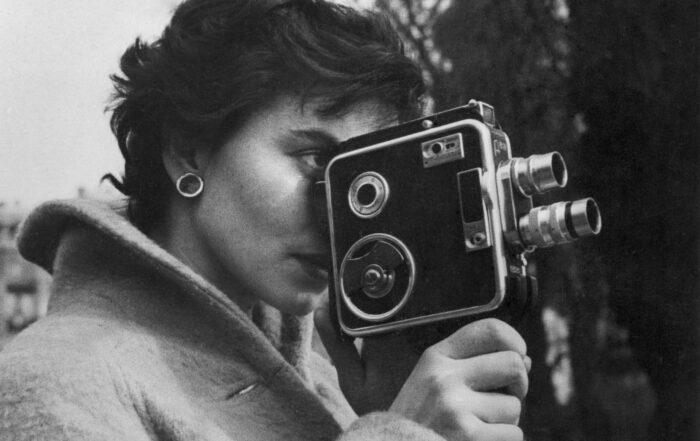
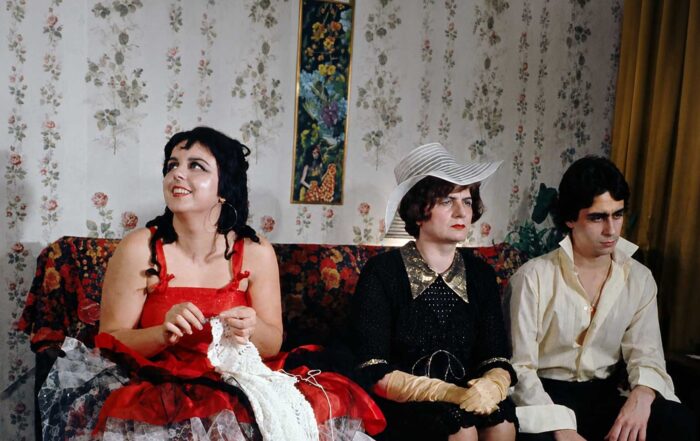
Love may have brought her to Italy, but her curiosity for revolution and her journalistic career were sparked there. She worked for public broadcasters and for radio, researching, producing and writing. It started with the factory councils at Pirelli and Fiat, and went on to the Italian left, to a country pulling itself apart and back together, and to her admiration for strong Italian women — becoming more and more interested in the feminist history of the country. This interest and research eventually led her to Donna: Women in Revolt. The film came out in 1980, distributed by the Amsterdam feminist collective Cinemien, was restored in 2023 by Eye Filmmuseum and the Netherlands Institute for Sound and Vision, and is now available online throughout Europe. So do not miss the opportunity to see it: https://player.eyefilm.nl/nl/films/donna-vrouwen-in-verzet. It is the only film she ever directed. We talked to her about how she came upon the subject.
Anna Ramskogler-Witt, director of the Doxumentale, talked to her in light of her film being part of ANOTHER STORY.
How did you become a journalist? What interested you?
I studied political science in Amsterdam in the ’60s. There were around 100 students in that first year, and only three women. I finished my studies in ’69. And then I had this love story with my later Italian husband, and we decided that we were going to live in Rome. I didn’t have any journalistic experience at all, but I just thought it would be a nice idea to write about Italian politics, as there was so much going on. In particular as I had finished my studies with a thesis on the Italian Marxist philosopher Antonio Gramsci. That was kind of the beginning.
At that time there was so much going on in Italy, in a political sense.
You can imagine. I saw the opportunity and had this idea of working as a journalist, so I called a little weekly that was printed in Amsterdam, a really left-wing one: the Groene Amsterdammer. And they were very enthusiastic and gave me the liberty to write what I wanted to. At the same time there were, especially in the north, in the big factories of Italy, Pirelli, Fiat, the big labour movement. You can consider it as the beginning of a really revolutionary movement. Young workers were having their consigli di fabbrica. My brother-in-law at that time had very good contacts in all these factories, and I went with him. That was my first article on what was happening in Italy, and that was the beginning of my career as a journalist.
And how did you go from writing to radio to filmmaking?
That was later, some years later. I started to write and at the same time I published the first translation of a selection of writings of Antonio Gramsci, for a Dutch publisher in Amsterdam. He had a well-known left-wing publishing house in Holland, Van Gennep. And his wife was a rather well-known radio and television journalist. She introduced me first to the radio and later to television. Dutch public broadcasting is rather complicated. It still is. There are many broadcasting companies, and many of them are related to political or religious organisations. So I worked for several little ones, and mostly of course left-wing ones. That was how I started with radio.
Were there established writers or journalists who inspired how you approached writing?
At the beginning of the ’70s I wrote a book on the Italian leftist groups, and at that time I met Rossana Rossanda. She was one of the journalists from il manifesto, which still is one of the left-wing papers coming out in Italy. As a journalist, she was very important to me. There was Luciana Castellina, also working at il manifesto. Luciana Castellina is now in her 90s, and I interviewed her a year ago. I was in Rome, and it was so nice to meet her again. Rossana Rossanda is not living anymore. She’s gone. But there were so many women also in politics. Emma Bonino of the Radical Party. A lot of strong Italian women, really, who inspired me.
You did this wonderful film, about strong, fierce Italian women. Where did the idea for the film come from?
I was still in contact with Hedda van Gennep; by that time she was a rather well-known presenter in Dutch television. I remember very well the first time, that was around ’78 I think, that I had this idea that I wanted to tell the story of Italian women. And I told her. And Hedda was such a fantastic woman. I just said: I want to make a film. And she said, yes, of course, why shouldn’t you. Do it. Just do it. And I said, okay, I’ll do it. She had very good contacts in administration and in politics as well, so it was rather easy. I got my first budget to do the research, and later on it was rather easy to get the money.
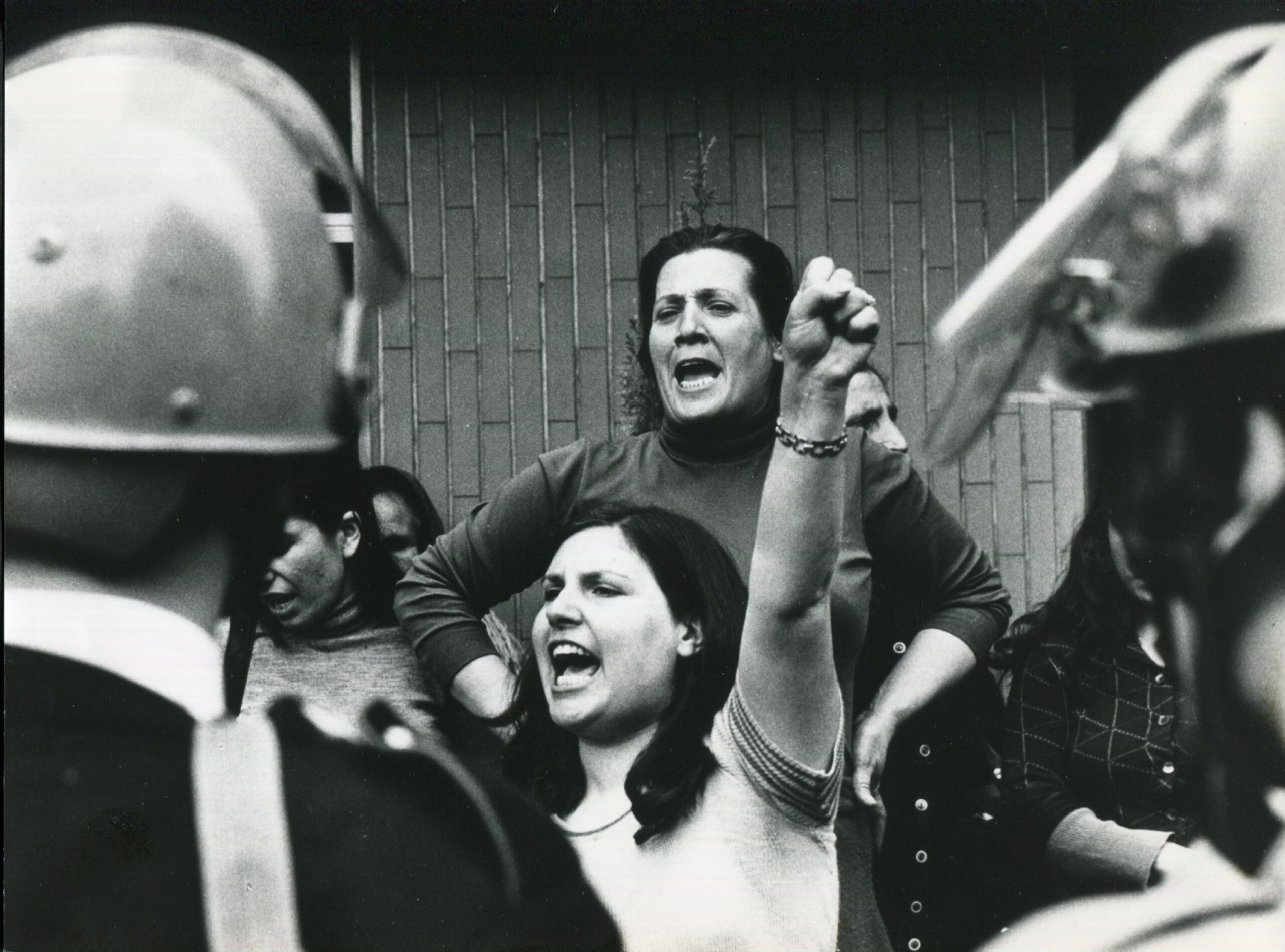
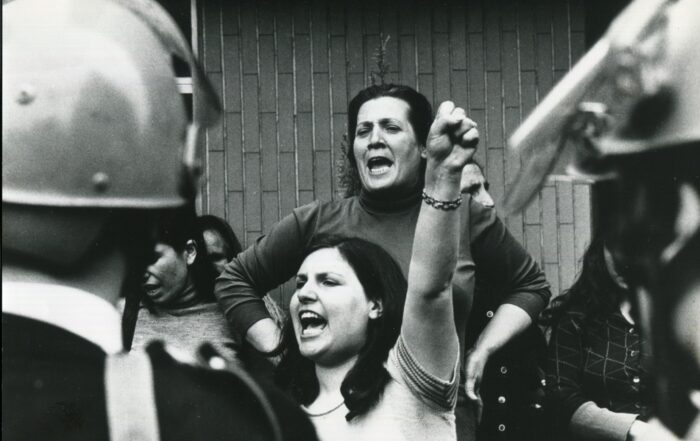
I wanted to change the narrative. In Holland and in most northern countries there was this idea of Italian women as just — oh, how can you say? Just sì, sì, signora. Catholic and obedient. And during all the research I did in those years in Italy, I saw how important the role of women in the anti-fascist movements had been. I met so many incredible, strong women. So I wanted to tell the story of Italian women of the whole century, from 1900 to 1980.
Starting a film like this is nearly impossible today. It would be very hard in these times to get a budget so easily.
It’s very impressive how you tell the story on various levels. Had you made a film before?
During all those 10 years in Italy I had collected already so many stories, so that was already part of it all when I started. And in the beginning I just — I had no idea of filmmaking, really no idea. So I started in the way you write an article. I wanted to tell the story from 1900 till 1980, 80 years of story, so I started with the beginning. And that is the story, in the film, of this old feminist woman who wrote Una donna, Sibilla Aleramo. And I continued that way, in a very chronological way. And then in January ’79, while I was still doing my research, there was this fascist attack on Radio Donna. That is where the film starts. I was still in the phase of research, but I contacted immediately the women that had been attacked by the fascists. Four of them at that time were still in the hospital. I went to see the only woman that was at home. We are still in contact. We still call each other. I interviewed the women of Radio Donna some weeks after the attack. Well, maybe some months after the attack.
And when I started the editing of the film, I had the incredible luck to meet Digna Sinke. Digna is still a well-known filmmaker in Holland, and she is an extremely good editor. I love the films she makes. They’re very out of the ordinary. A big part of the success of Donna is due to Digna, because she made a film. I think I was writing a book more or less, or writing a very long article, and she made a film of it. That’s really her merit.
You start the film at the 1900s. Why the turn of the century and not the start of fascism?
Because I was very much interested in the first feminist movement, and that brought me back to around 1900. It more or less starts with this book, Una donna by Sibilla Aleramo. That was for me the beginning, just to discover the first feminist movement and what it was all about in Italy. I thought that was really a nice start. And then the figure of this woman was also so interesting, because she was really a very radical woman. But during fascism she was not a real opponent. So in her ambiguity, for me, she was also very important. Because I do love ambiguous stories. It’s very easy to talk about heroines and people that go just straight to their goals in their life, but ambiguity is part of our lives.
Where did your fascination for revolution and revolutionaries come from?
I think I was born revolutionary (laughs). I never accepted my role as a woman. I remember very well, as a young girl — I was born in ’43, so you can imagine I grew up in the ’50s — it was just normal to say, no, you can’t do that, you can’t climb into trees, you can’t do that, you can’t do so. I never accepted that role. I always thought: what men can do, I can do as well. My parents were communists, and in that way they were not so conventional. They supported that. They said, yes, of course you can do what men do. I still consider myself a feminist, but being a feminist for me was not accepting the role that society puts on your being. I never accepted that. So when the feminist movement started, for me it was completely in line with what I had always seen as normal. It was normal for me to object to all the traditional gender roles.
Despite work like yours, resistance against fascism is still very male-dominated storytelling. Where do you think that comes from?
Oh my God. It’s a long story. I think we have had a period, especially in the ’80s and the ’90s, that we really thought that feminism, we did not need it anymore in Western Europe. Our roles were really changed, and we had conquered our positions in society. We lived a period of illusions. Of course a lot of things did change. We have to consider that as well. As I think back in my life — I’m eighty-three now — I have seen really big changes in the way women are considered. But this is not the end. And now there is this reversal. You see the movement in history going back to traditional forms. So we just have to continue to fight. What I’ve been working on the last years is the Spanish Civil War. Right now, just in these days, I’m writing about the role of women in the Spanish Civil War, which is underestimated in the same way as the role of women in so many stories is underestimated. So we just have to continue to tell these stories, and to tell the stories of women.
Why did you never return to film after Donna?
I did try to make a film about Tina Modotti. But I had a job, I had a child. It was much more difficult to combine. My job, and being a mother, and having old parents. Making a film takes a lot of time. It’s not easy. It’s really a job. So I did not find the opportunity to make another film, but I made a lot of beautiful things for the radio. So that was okay.
But the radio work was very successful. It’s also a very beautiful way of storytelling.
In that way I continued storytelling. When I came back to Holland I entered a feminist radio programme, and I continued in that same tradition. Always looking for stories to tell about women. Always looking for stories to tell about resistance. Always looking for stories about not obeying men.
Yvonne Scholten was born in 1943. Donna: Vrouwen in verzet (NL, 1980, 66 min) is available to watch at Eye Filmmuseum: https://player.eyefilm.nl/nl/films/donna-vrouwen-in-verzet. This interview was conducted by telephone in September 2026 and has been edited for length and clarity.