The past and the present: a short story about hidden meanings
One of the aims of Another Story is to preserve lesser-known film history and bring to light the parts of it that remain largely unknown to wider audiences. But looking back is only the starting point. The real excitement lies in discovering new connections, opening up fresh perspectives and finding unexpected ways to talk about cinema.
FIRST CAME THE ORIGINAL FILM PROGRAMME
Watching films in Another Story soon makes you realise that this is about much more than a history lesson. The programme helps us understand how we got here, discover alternative ways of seeing the world, and question the stories we’ve been taught to accept. Film history is full of missing pieces, shaped by choices about what was distributed, preserved and celebrated. Revisiting lesser-known films helps us recover a richer, more complex history of cinema.
THEN CAME THE SURPRISE
But that is not the whole story. Again and again, one discovery stands out: the history of cinema is not a straight line leading to the present. The past is full of ideas, experiments and possibilities, and these films reveal radical approaches to storytelling, politics, gender and form that still feel surprisingly relevant today. Because these films have never quite made it into the canon, we can encounter them without the expectations that surround established classics. We discover films that speak to us now through an emotion, a social tension, an experimental form or an everyday experience that feels startlingly contemporary.
A MEETING
HER Docs Foundation based in Warsaw is one of the main partners of Another Story. In the summer, the Foundation took part in Wildcards, an inspiring young curators’ residency organised by Bucharest-based F-SIDES Cineclub. It offers emerging curators the tools, mentorship and space to develop their own film programmes. Through a workshop and follow-up consultations, we worked with three young curators paired with our organisation to explore new ways of thinking about cinema and bring their ideas to life in collaboration with the HER Docs Film Festival in Warsaw, Poland.
THE RESULT: DOUBLE SCREENINGS
Our focus was on the process: how could we give the young curators as much room as possible to co-shape the festival programme? The answer emerged through dialogue and a simple idea: we don’t learn only from people who know more than we do. We also learn from those who see things differently. The task was to find a contemporary short film that would enter into a conversation with one of four Another Story feature documentaries, whether through a shared theme, a contrasting perspective or an unexpected connection that opened up new meanings.
This exercise led us to new ways of presenting films from the past: not simply by screening them today, but by placing them in dialogue with contemporary cinema and the women who make it. HER Docs audiences, in turn, were invited to discover new ways of reading these films: not just by interpreting them individually, but by allowing their understanding to evolve through encounters with other perspectives.
Kasia Świątoniowska
HER Docs Foundation
Below we present the program of double screenings together with the introductions written by the young curators: Gabriela Cardoș, Monica Dănilă and Andreea Chiper.
The Woman’s Greatest Value Is Her Silence (Gertrud Pinkus) + Battlefield (Silvia Biagioni)
by Gabriela Cardoș
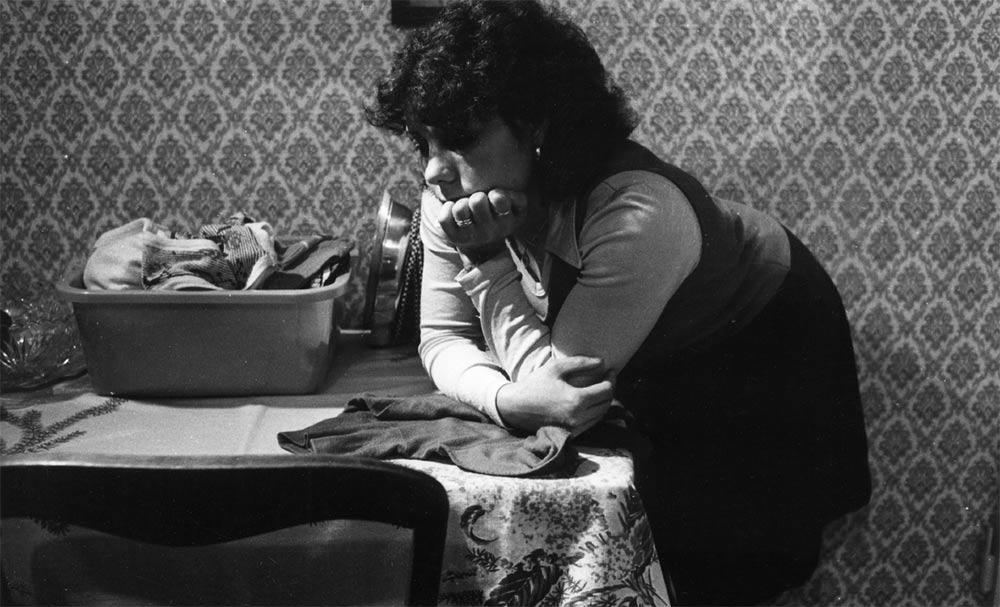
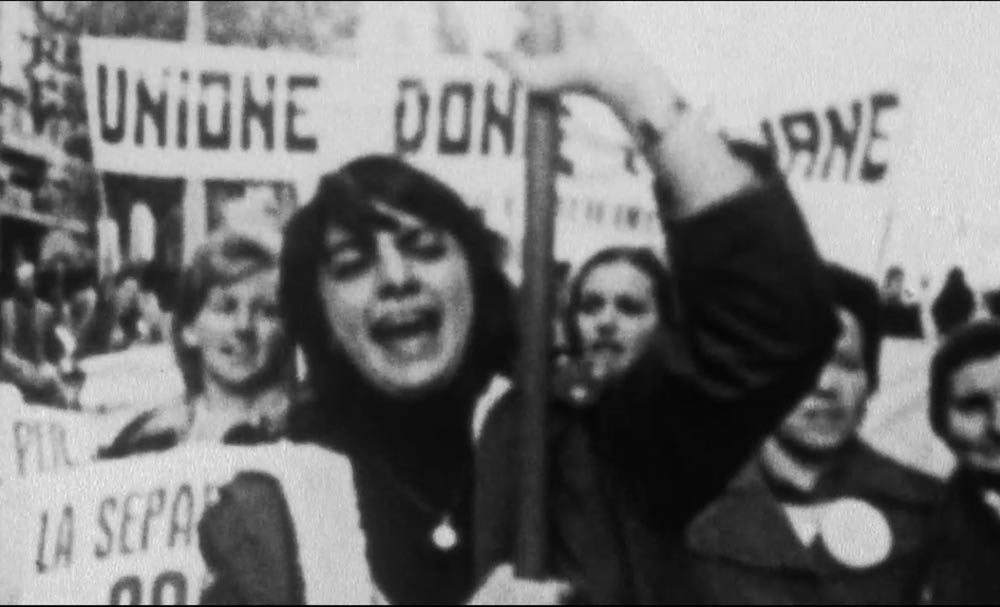
The voice of Maria M. echoes the historical impingements on womanhood: that a woman’s greatest value is her silence is at least as old as Sophocles and holds just as much value elsewhere as it does for southern Italians. Against the law of “omertà”, which rendered no protagonists willing to be filmed for the initial purpose of a documentary, Gertrud Pinkus crafts an ingenious storytelling method where a southern Italian migrant family to Germany enacts Maria’s oral telling of her own life as a migrant, while maintaining her anonymity.
Decades later, Silvia Biagioni reminds us that the strains of womanhood are atemporally incessant across both past and present-day Europe. Battlefield concludes with a poem borrowed from Collettivo Femminista di Cinema’s 1971 film, L’aggettivo donna. The unknown poetessa writes: ”I am the one people talk about, but I have no voice … I am the one with no language”. Together with composer Andrea Laudante, Biagioni re-appropriates archival materials which highlight the 1960s and 1970s feminist movement in Italy, while bearing dissonance to the same timeline in which Maria M. was raising her family.
The symbolic breadth of showing these films together petitions multiple stages of reflection. Maria’s life seems untouched by the activist efforts of her co-nationals and we may agree that is still so for many women today. While ethos and grievance may render others to pass judgement on Maria’s life choices upon seeing the vivacious strife of other women at the time, the purpose of the program is not to evaluate her possible shortcomings, but to rethink a feminist essence. The double bill aspires to the idea that feminism, precisely as the allyship between women, could be a lifestyle. That, to some, what feels like a banal, apolitical act may in fact hold more political resonance than a public protest, just as was the case for Maria and her co-worker, who later becomes a friend.
Nightshift (Robina Rose) + Hotel Royal (Salome Lamas)
by Monica Dănilă
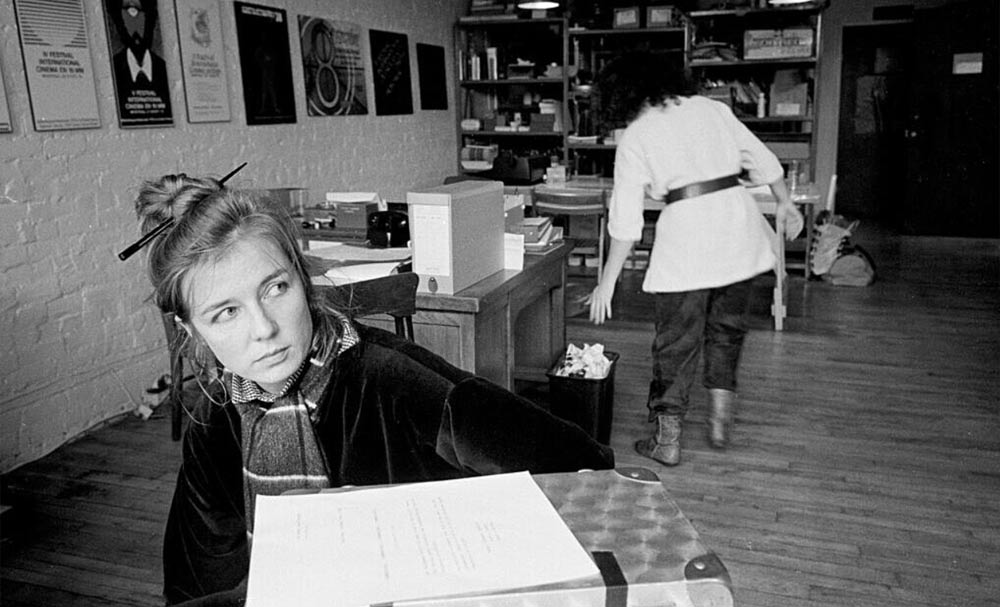
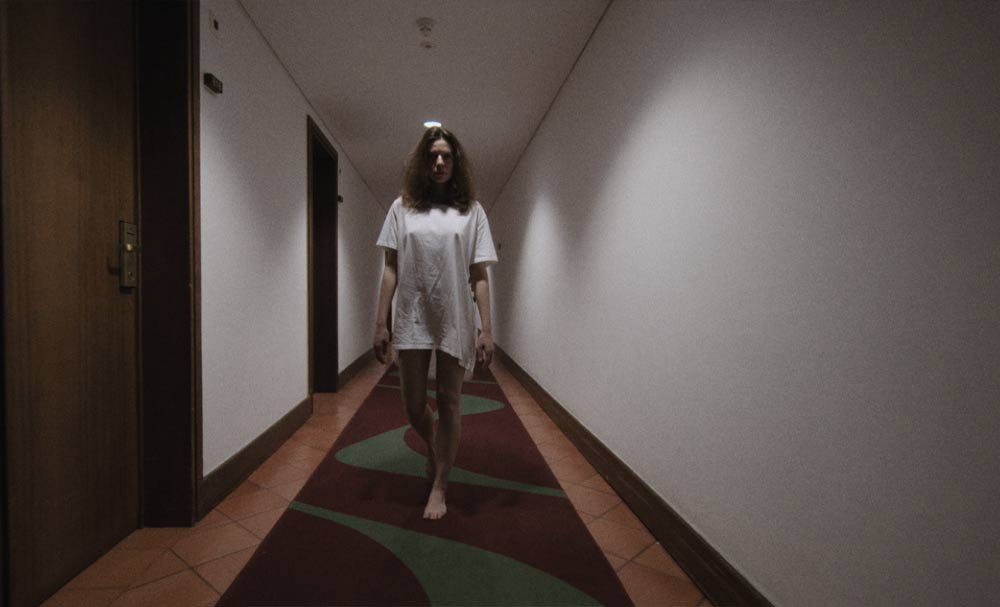
You enter a hotel through the observant anonymity of a receptionist and a chambermaid. The hotel becomes more than a setting, the act of looking becomes explicit.
Both Nightshift by Robina Rose and Hotel Royal by Salome Lamas use the conventions of documentary filmmaking while introducing constructed situations and fictional layers. In Nightshift, Rose stages her experience of working as a night receptionist at the Portobello Hotel in London, inviting members of the city’s punk and countercultural scene to inhabit the film’s nocturnal world. Drawing from the conditions of the COVID-19 pandemic, Hotel Royal approaches the space from an altogether more clinical and unsettling perspective of a chambermaid, building a place where the impossibility of communication makes observation the only available form of contact.
Following Marc Augé’s idea of non-place, the hotel becomes a space of transit, a place temporarily inhabited without establishing any lasting relationship with it. The hotels we are presented in the films are intimate, yet anonymous, one registering the presence of people who drift in a performed atmosphere, the other assembled from fleeting encounters that accumulate into a strange archive of traces and imagined lives, both through the eyes of a worker who remains.
The chambermaid in Hotel Royal observes guests through the traces they leave behind in their rooms, their belongings and routines. Constructed methodically, her attention turns into a form of voyeurism, transforming fragments into speculative narratives. In a quieter, more unobtrusive way, the receptionist in Nightshift remains at the margins of her encounters, allowing the lives of passing guests to unfold.
The films leave gaps for the viewer to inhabit, without asking us to simply witness a reality that has already been established. “There’s no need to reinvent the world; paying close attention is enough”, the chambermaid tells us.
I Often Think of Hawaii (Elfi Mikesch) + Clean With Me (After Dark) (Gabrielle Stemmer)
by Andreea Chiper
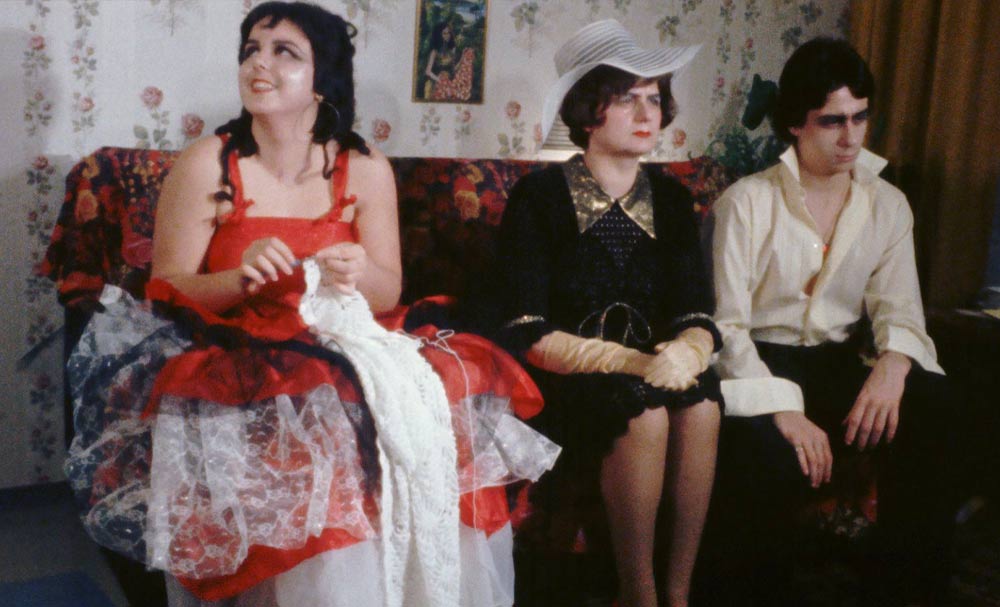
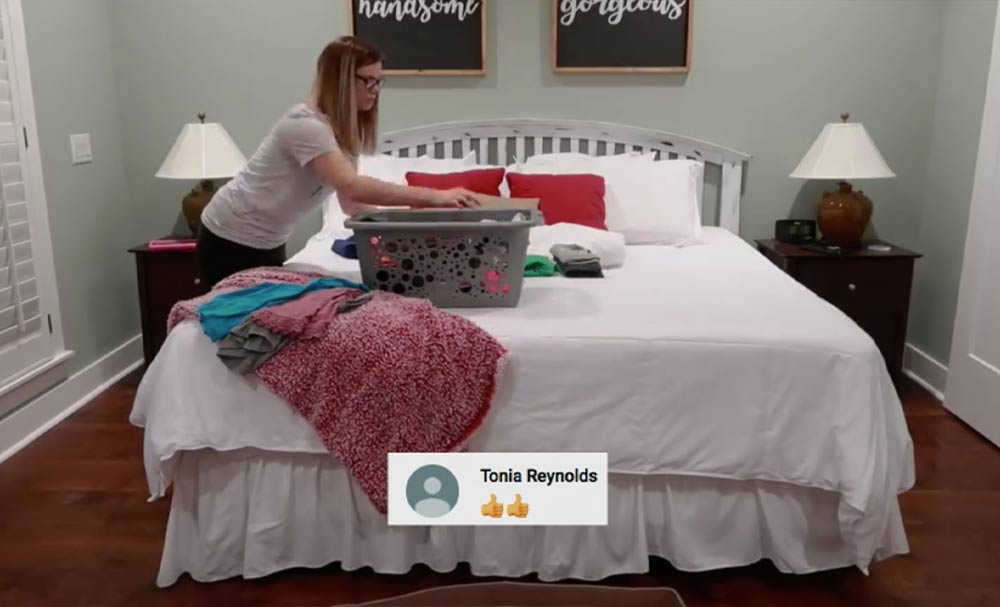
In 1978, Elfi Mikesch made a monumental film about femininity and the power of escapism in a teenage girl’s life. In visions of extravagant realities staged in the middle of a gloomy West Berlin living room, I Often Think of Hawaii features Carmen and her family trapped in their everyday surroundings. Carmen lives in a proto-grunge universe rebelling against her Cinderella-like existence by means of escaping inside an illusion inspired by colorful postcards and Paul Eluard’s poetry. Forty years later, Gabrielle Stemmer shows us that the internet culture hides the traces of another type of illusion: the perfect life of an American housewife. Her desktop documentary Clean With Me (After Dark) is a poignant depiction of the cruel realisation that this “perfection” is nothing but a facade and underneath it, women find themselves captives in what was once a dream life. The ethical voyeurism of her descent into these women’s lives calls out the apparent freedom of governing a household while following social media structures of vulnerability.
Both Mikesch and Stemmer adhere to the legacy of Jeanne Dielman and both of them manage to remind us that the clockwork of the patriarchal mechanism is still ticking whilst holding women entrapped and forcing them to escape however they can. The imagery of cleaning is crucial: cleaning as obsession, cleaning as a job, cleaning as therapy, cleaning as mockery and even cleaning as a substitute for a purpose. Underlining the absolute loneliness and dullness of the confined spaces these women call home, both films present the illusion as a gentle protest against the rules of a world hostile to women. Sometimes fulfilling a dream and sometimes cracking one.
The Ceiling (Vera Chytilová) + Lili (An Van. Dienderen)
by Gabriela Cardoș
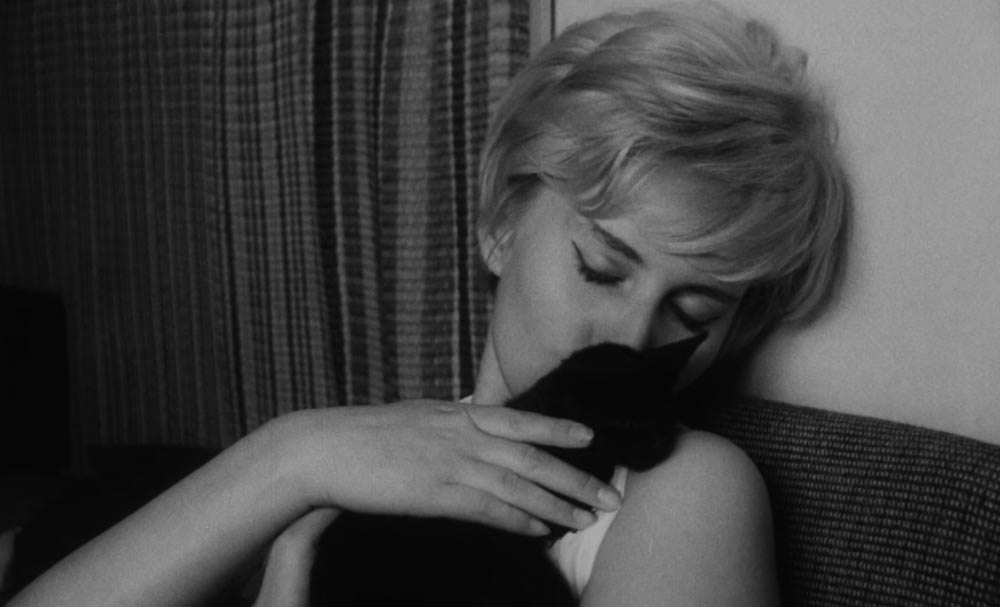

Is pretty privilege a blessing or a curse? And is it possible to discern the reverberations of the male gaze in the multitude of social phenomena we struggle with since the dawn of the white world? A quick read about Vera Chytilová’s early work will let you in on her favorite theme, women’s emancipation, where interpretation has it as an unending fight to remove oneself from existential stereotypes. Though, if we may, a more precise approach to her work is that of a fight to uproot stereotypical convictions altogether.
An Van. Dienderen’s Lili has a go at answering the first question. In Lili’s case it’s about covert acts of racism that often remain unknown or overlooked, resting unbothered in objects and tools used in cinema, as an “invisible norm” and about objectifying women. Lili “just happened to be there” and, even better, she had “just the right skin tone”. Objectification still requires a living being. Although an inanimate object does not complain, take breaks or unionise against a higher authority, the real thing is better, at least once it can be robbed of being and turned into a perfectly inert living object.
Chytilová’s The Ceiling tackles the second question with a radical simplicity that must not be underestimated. The film unveils four examples of how the patriarchal discourse trickles through a society, intoxicating it. The first moment reveals the ignorant complicity of male youth in the proliferation of such discourse by way of their naivety, constraining Marta’s silence in their company. The second moment regards a group of young women’s seemingly innocent objectification of young men, constraining Marta’s alienation in their company. The third moment visits a validating reinforcement of the patriarchal ethos in relations between younger and older women; where misplaced frustration with a corrosive system turns them against each other. While the first three moments raise questions of complicity, the final moment, marked by Marta’s romantic involvement, begs the question of whether it is possible or even adequate to separate the definition of a patriarchal system from that of capitalism.